Odia Calendar 2027 January
Welcome All! The Odia Calendar 2027 January (Kohinoor Calendar 2027 January) Free pdf can be downloaded here.
Odia Calendar 2027 January :Are you looking for an Odia Calendar for January 2027? Great! We provide the January calendar along with a complete list of Odisha festivals, vratas and holidays. This article also explains how Odia families observe important days at home. A January 2027 Odia calendar image is included, and you can also download the Odia January calendar PDF. Below is a link to the Odia Panji calendar PDF.
Table of Contents
Odia Calendar 2027 January Month
Here is Calendar Of Kohinoor Odia Calendar 2027 January You can Read.
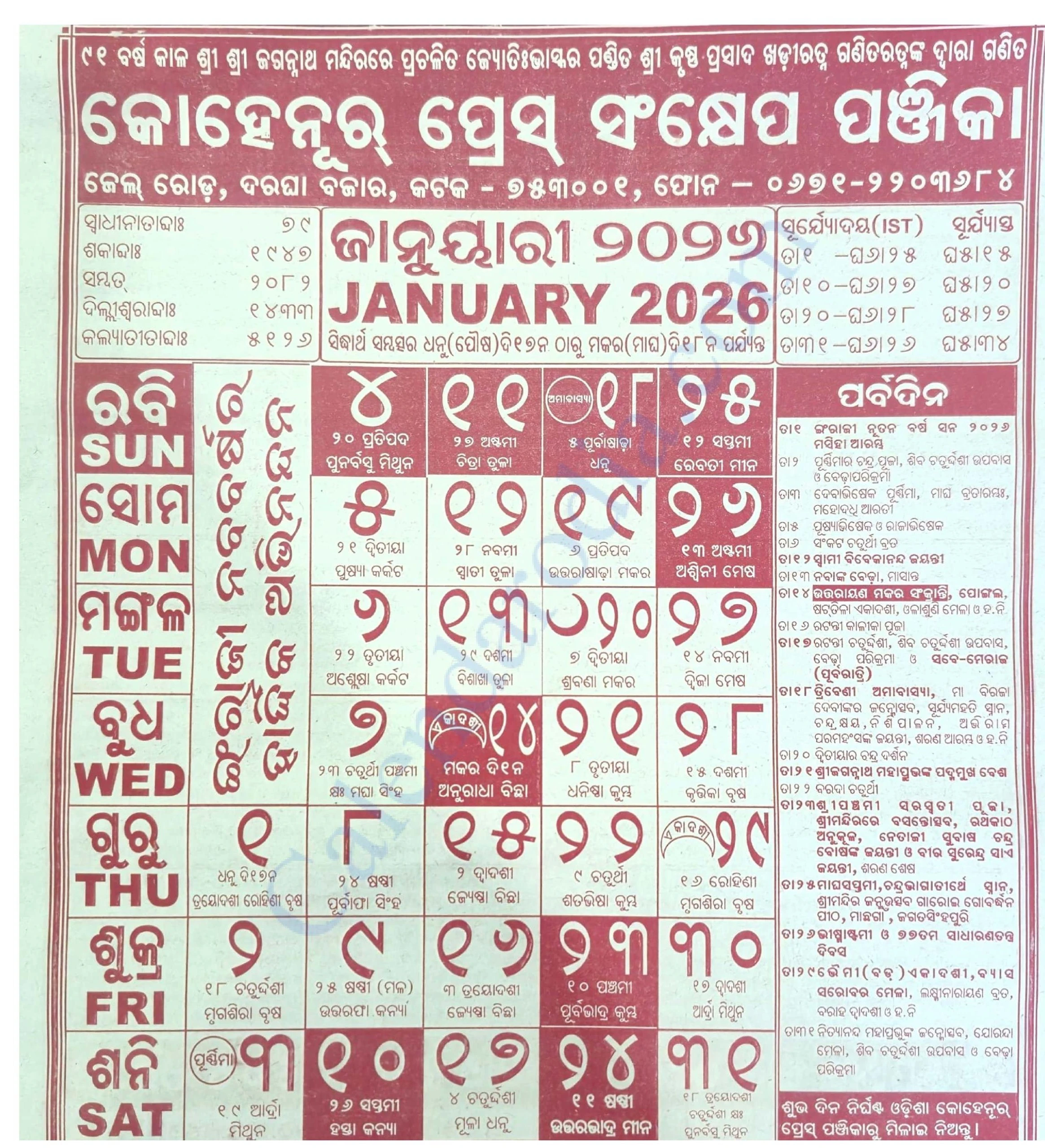
Kohinoor Odia Festivals in January 2027
I’ll organize all the information from the Kohinoor odia calendar text into a comprehensive day-by-day table format:
| Date | Day | Festival / Event |
|---|---|---|
| January 3, 2027 | Sunday | Saphala Ekadashi |
| January 5, 2027 | Tuesday | Bhauma Pradosha Vrata and Masa Shivaratri |
| January 7, 2027 | Thursday | Pausha Amavasya |
| January 15, 2027 | Friday | Makara Sankranti and Pausha-Magha solar transition |
| January 18, 2027 | Monday | Samba Dashami |
| January 18, 2027 | Monday | Putrada Ekadashi, Smarta observance |
| January 19, 2027 | Tuesday | Putrada Ekadashi, Vaishnava observance |
| January 20, 2027 | Wednesday | Budha Pradosha Vrata |
| January 22, 2027 | Friday | Pausha Purnima and Puspuni |
| January 23, 2027 | Saturday | Netaji Subhas Chandra Bose Jayanti and Veer Surendra Sai Jayanti |
| January 25, 2027 | Monday | Lambodara Sankashti Chaturthi |
| January 26, 2027 | Tuesday | Republic Day |
Festival dates can depend on the tithi present at sunrise, sunset, moonrise or the nighttime worship period. This explains why Putrada Ekadashi may appear on January 18 or 19 in different traditions. Confirm exact timings and the tradition followed by your household in the Odisha Panji used by your family, temple or district.
Festival dates can depend on the tithi present at sunrise, sunset, moonrise or the nighttime worship period. This explains why Putrada Ekadashi may appear on January 18 or 19 in different traditions. Confirm exact timings and the tradition followed by your household in the Odisha Panji used by your family, temple or district.
How Odia Families Observe the Festivals of January
Makara Sankranti
Makara Sankranti marks the Sun’s transition into Makara and the seasonal beginning of Magha. In Odisha, the day is connected with harvest gratitude, Surya worship and the preparation of makara chaula.
Many families bathe early and prepare the offering before eating breakfast. The ingredients differ between households, but newly harvested rice, coconut, banana, milk products and jaggery are commonly used.
- Clean the puja ghara and draw a simple Jhoti or Chita near the worship place.
- Light a diya and place flowers before Lord Jagannath, Surya or the family deity.
- Mix the makara chaula ingredients in a clean vessel.
- Present the preparation as bhoga with fruit and water.
- Perform arati and distribute the offering as prasad.
Puja items: Diya, flowers, water, new rice, banana, coconut, milk or chhena, jaggery and seasonal fruit.
Temple worship may be more elaborate, but a household observance can remain simple. Families normally preserve their inherited makara chaula recipe rather than following a single standard version.
Samba Dashami
Samba Dashami is one of Odisha’s distinctive Surya festivals. Mothers traditionally observe it while praying for the health and protection of their children.
The morning worship may include separate food offerings associated with individual family members. Pitha, kheeri, fruit and other familiar preparations are arranged according to household custom rather than a fixed universal list.
- Bathe before sunrise and clean the courtyard or puja area.
- Draw a Jhoti or Chita and arrange the prepared food offerings.
- Light a diya and offer water to the rising Sun.
- Remember each child while presenting the bhoga.
- Read or listen to the traditional Samba Dashami account.
- Complete the worship with arati and share the prasad.
Puja items: Water vessel, diya, flowers, fruit, pitha, kheeri, coconut, banana and other family offerings.
Some families make offerings to the Sun again later in the day. The number and type of dishes vary widely, so the method followed by elders in the household should take priority.
Pausha Purnima and Puspuni
Puspuni is a harvest-related celebration observed most prominently in Western Odisha on Pausha Purnima. It gives farming households an opportunity to rest after the paddy harvest and share food with relatives, workers and neighbours.
Unlike a strict household vrata, the day may have a strong community character. Families prepare dishes such as arisa pitha, kakara pitha or manda pitha when these foods are part of their local custom.
- Clean the home and place a diya in the puja ghara.
- Offer thanks to the family deity for the completed harvest.
- Present rice, pitha, coconut or fruit as bhoga.
- Perform a short arati with family members.
- Distribute prasad and share the prepared meal respectfully.
Puja items: Diya, flowers, harvested rice, coconut, banana, pitha and clean water.
The scale and style of Puspuni differ between coastal and western districts. Community gatherings, shared meals and local cultural activities are especially associated with Western Odisha.
How Odia Families Observe the Festivals of January
Makara Sankranti
Makara Sankranti marks the Sun’s transition into Makara and the seasonal beginning of Magha. In Odisha, the day is connected with harvest gratitude, Surya worship and the preparation of makara chaula.
Many families bathe early and prepare the offering before eating breakfast. The ingredients differ between households, but newly harvested rice, coconut, banana, milk products and jaggery are commonly used.
- Clean the puja ghara and draw a simple Jhoti or Chita near the worship place.
- Light a diya and place flowers before Lord Jagannath, Surya or the family deity.
- Mix the makara chaula ingredients in a clean vessel.
- Present the preparation as bhoga with fruit and water.
- Perform arati and distribute the offering as prasad.
Puja items: Diya, flowers, water, new rice, banana, coconut, milk or chhena, jaggery and seasonal fruit.
Temple worship may be more elaborate, but a household observance can remain simple. Families normally preserve their inherited makara chaula recipe rather than following a single standard version.
Samba Dashami
Samba Dashami is one of Odisha’s distinctive Surya festivals. Mothers traditionally observe it while praying for the health and protection of their children.
The morning worship may include separate food offerings associated with individual family members. Pitha, kheeri, fruit and other familiar preparations are arranged according to household custom rather than a fixed universal list.
- Bathe before sunrise and clean the courtyard or puja area.
- Draw a Jhoti or Chita and arrange the prepared food offerings.
- Light a diya and offer water to the rising Sun.
- Remember each child while presenting the bhoga.
- Read or listen to the traditional Samba Dashami account.
- Complete the worship with arati and share the prasad.
Puja items: Water vessel, diya, flowers, fruit, pitha, kheeri, coconut, banana and other family offerings.
Some families make offerings to the Sun again later in the day. The number and type of dishes vary widely, so the method followed by elders in the household should take priority.
Pausha Purnima and Puspuni
Puspuni is a harvest-related celebration observed most prominently in Western Odisha on Pausha Purnima. It gives farming households an opportunity to rest after the paddy harvest and share food with relatives, workers and neighbours.
Unlike a strict household vrata, the day may have a strong community character. Families prepare dishes such as arisa pitha, kakara pitha or manda pitha when these foods are part of their local custom.
- Clean the home and place a diya in the puja ghara.
- Offer thanks to the family deity for the completed harvest.
- Present rice, pitha, coconut or fruit as bhoga.
- Perform a short arati with family members.
- Distribute prasad and share the prepared meal respectfully.
Puja items: Diya, flowers, harvested rice, coconut, banana, pitha and clean water.
The scale and style of Puspuni differ between coastal and western districts. Community gatherings, shared meals and local cultural activities are especially associated with Western Odisha.
Conclusion
On this Article, I have given the Odia calendar of January 2027 Month and I have also told when are the festivals and ekadashi in January in the complete table format and when are the holidays in this Article post, if you liked this Article then definitely share it with your friends and family and you can read other Month Calendarz on our site And Also like Panji, and horoscope all zodiac signs, thank you visit our Article.